

Tashkeel is delighted to unveil the participants of the Tanween Design Programme 2026, marking its thirteenth edition. The five designers presenting this year's collection are Alia AlShamsi, Ahmad Kattan, Ayah Alkhatib, Abdulla Abbas, and Nethra Ganesan.
Now in its thirteenth edition, the Tanween Design Programme continues to explore the relationship between sustainability, cultural identity, and contemporary design. Over the course of the programme, participants engaged in material research, experimentation, mentorship, and collaboration with local manufacturers and craftspeople to transform their concepts into finished products. Spanning furniture, lighting, and functional objects, the 2026 collection reflects diverse approaches to material innovation, cultural storytelling, and craftsmanship, connecting the UAE's evolving design landscape with its heritage and everyday experiences.
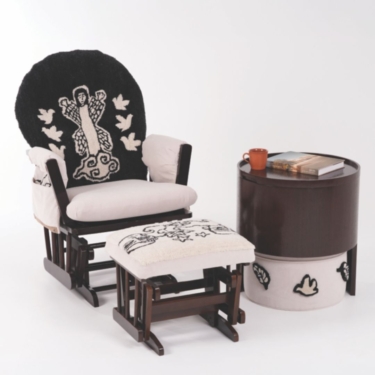
Alia AlShamsi
Inspired by folklore and the historic monsoon trade routes connecting South Asia, the Arabian Peninsula, and East Africa, Waq Waq Island explores the movement of stories, memories, and cultural exchanges across generations. Through reimagined furniture and textile art, Alia AlShamsi creates an Offline Corner — a dedicated space within the home for reflection, imagination, and moments away from the digital world. The collection includes a rocking chair, rocking footrest, modular table and ottomans, vintage mirror, and textile artwork. Combining pre-owned furniture, hand-dyed Merino wool, and tufted illustrations, each piece transforms cultural narratives into contemporary objects that invite connection, contemplation, and storytelling.
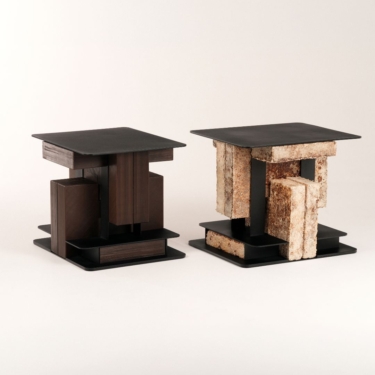
Ahmad Kattan
Aftermatter explores the potential of discarded materials through a modular design system that brings together material research, architecture, and sculptural furniture. Ahmad Kattan's Object I takes the form of a sculptural side table presented in two versions: one produced through 3D printing with plant-based PLA mixed with spent coffee grounds, and another incorporating organically grown mycelium developed with NUMU as the material research and development partner. Drawing on brutalist and minimalist architectural principles, the design balances structure, proportion, and material experimentation. By allowing different materials to exist within the same modular framework, Aftermatter challenges conventional approaches to production and explores how overlooked resources can acquire new purpose and value.
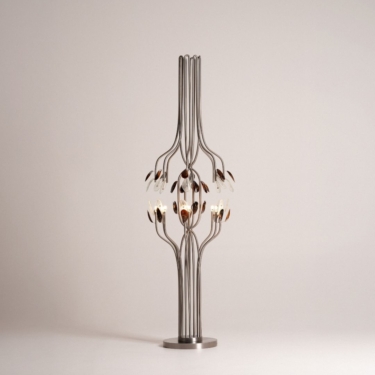
Ayah Alkhatib
Athar is a collection of four lighting pieces that transforms discarded mussel shells and recycled glass into contemporary objects of light. Sourced from restaurants across the UAE, these materials are given a new purpose while retaining traces of their previous use. Rather than reshaping the shells, Ayah Alkhatib preserves their natural forms, allowing their curved surfaces and pearlescent interiors to soften and diffuse light. Recycled glass is broken, melted, and reformed into luminous elements. Comprising hanging, table, wall, and floor lighting, Athar draws inspiration from patterns found in nature, exploring repetition, accumulation, and transformation. The collection reflects on consumption, material permanence, and the possibilities of extending the life of everyday materials through design.
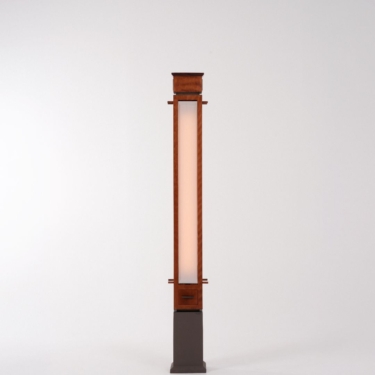
Abdulla Abbas
Drawing inspiration from the traditional Emirati ritual of burning bukhoor, Mbkhar reimagines the mabkhar as a contemporary architectural object within the home. The collection includes a floor lamp, desk lamp, and bukhoor burner, bringing together fragrance, light, and smoke in objects designed for everyday use. Inspired by the form and environmental principles of traditional wind towers, Abdulla Abbas explores the movement of rising smoke through illuminated structures. Combining clay, wood, brass, and textiles, the pieces create a dialogue between traditional materials and contemporary craftsmanship. Mbkhar transforms a familiar cultural practice into a spatial experience, allowing the movement of smoke, the diffusion of scent, and the warmth of light to become part of the domestic environment.
Nethra Ganesan
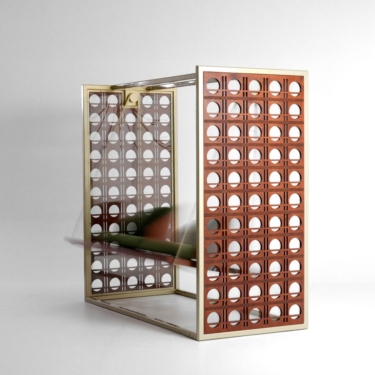
Inspired by Gulf modernist architecture and South Asian craft traditions, The Connect 4 Collection explores the relationship between cultural identity, migration, and the spaces that bring people together. Drawing on the distinctive geometric façade of Abu Dhabi's Obeid Al Mazroui Building, Nethra Ganesan translates architectural forms into two contemporary design objects: Jhula, a reinterpretation of the traditional South Asian swing, and Diya, a sculptural lighting piece designed for both table and wall use. Crafted using wood, metal, and hand-carved details, the collection incorporates the skills of South Asian artisans working in the UAE. Through its combination of architectural references and traditional craftsmanship, Connect 4 celebrates shared histories, cultural exchange, and the role of design in creating spaces for connection.
The Tanween design programme was initiated in 2013 by Tashkeel and the late Roanne Dods, co-producer of Small is Beautiful. Alumni include Alya Al Eghfeli (UAE), Amer Aldour (UAE), Abdalla AlMulla (UAE), Ebrahim Assur (Cape Town), Eman Shafiq (Pakistan), Hala Al Ani (Iraq), Hamza Omari (Jordan), Huda Al Aithan (KSA), Ibbini Studio (UK/Jordan), Khaled Shalkha (Russia), Khawla Mohammed Al Balooshi (UAE), Lana El Samman (Lebanon/Canada), Latifa Saeed (UAE), Lina Ghalib (Egypt), Lujain Abulfaraj (KSA), Lujaine Rezk (Egypt), Myrtille Ronteix (France), Nada Abu Shaqra (Palestine), Neda Salmanpour (Iran), Nuhayr Zein (Egypt), Rand Abdul Jabbar (Iraq), Reema Al Mheiri (UAE), Renad Hussein (Jordan), Saher Oliver Samman (UK), Salem Al Mansoori (UAE), Sara Abu Farha (Palestine), Shaza Khalil (Egypt), Studio MUJU (UK/Egypt), Talin Hazbar (Syria), Tasneem Tinawi (Syria), Yara Habib (Lebanon/Canada), Zeinab Al Hashemi (UAE), Zuleika Penniman (USA/Lebanon), Majid Al Bastaki (UAE), Khadija Al Mazimi (UAE), Rimsha Kidwai (PAK), One Third Studio(UAE/Iraq), Samara & The Poet Studio (UAE/Jordan), Osama Rashad (Egypt). Hessa Alghandi (UAE), Jasim Alnaqbi (UAE), Sketch & Space Studio (UAE), Nasser Alghawi (UAE), Tasneem Al Nabhani (Oman), Clock & Cloud Studio (CZ/IND), Sarah Al Dulaimi (UK), Alia AlShamsi (UAE), Kattan (Syria), Nethra Ganesan (India), Ayah Alkhatib (Palestine), and Abdulla Abbas (UAE).
Share this page:
Mentors
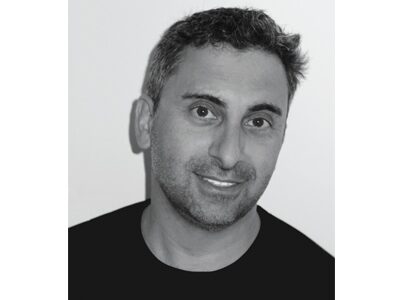
Kevin S. Badni is the Head of the College of Arts and Creative Enterprises, Zayed University. Previously, he was the Head of Art and Design at the American University of Sharjah. He received his Bachelor’s degree in Product Design from Loughborough University and his Master’s in Multimedia Design from De Montfort University in the UK. Before becoming an academic, Badni spent ten years as a professional designer working in the design industry, including managing the UK’s first commercial Virtual Reality centre. His main research area of interest is the personal perceptions of vision; he has had his art exhibited in galleries in the UK, Australia, America, Colombia, Italy and the UAE.
Helen Voce is a supporter of creative people and creative industries. As an independent project manager, event and programme producer in the creative industries she works locally, nationally, internationally and voluntarily from a base in Scotland. Freelance, she designs, facilitates and produces opportunities, initiatives and spaces in which creative practitioners, micro-businesses and projects can realise their full artistic and business potential. With a professional specialism and personal interest in contemporary and heritage craft and design, current and former clients include Tashkeel, the British Council, Creative Scotland, the European Crafts Alliance, Crafts Council UK, Make Works and Cove Park international artist residency centre.
Current Participants

Alia AlShamsi
Alia AlShamsi born in Dubai in 1982, is an Emirati-Italian multidisciplinary artist, author, curator, and cultural strategist whose practice explores memory, archives, folklore, and identity through p...

Kattan
Ahmad Kattan is a Syrian multidisciplinary concept designer, architect, and founder of Kattan Design, an award-winning design research studio working at the intersection of architecture, material rese...

Nethra Ganesan
Nethra Ganesan is an architect, maker and spatial practitioner. She holds a MArch+AA Diploma from the Architectural Association School of Architecture, UK. She is currently an Architect and Exhibition...

Ayah Alkhatib
Ayah Alkhatib is a Palestinian architect and multidisciplinary designer based in Abu Dhabi and Dubai. Working across furniture, objects, and spatial design, her practice moves between research, craft,...

Abdulla Abbas
Abdulla Abbas is an Emirati architect and designer based in Dubai, where he currently works at Foster + Partners. A graduate of the American University of Sharjah, his work explores the ways in which ...
Opening Hours
Tashkeel Alserkal
Makerspace, Unit 89, Alserkal Avenue
Sat-Thu 10am – 7pm
(closed Fridays & public holidays).
Tashkeel Nad Al Sheba
Nad Al Sheba 1
Daily 8am - 10pm
How to find us

